
One of the things I've always enjoyed about coding is getting completely locked into a problem. You know what you're building, each small obstacle leads to the next decision, and you stop noticing how much time has passed.
With agentic coding, I don't always get that feeling. I can produce more code and still feel less connected to the project.
I don't think that means AI ruined coding. I use it every day. But the way many of us start using it replaces the tight feedback loop that made coding satisfying with a prompt, a wait, a notification, and a context switch.
Prefer to watch? I walk through these workflows in my video on traditional coding, agentic coding, and flow state.
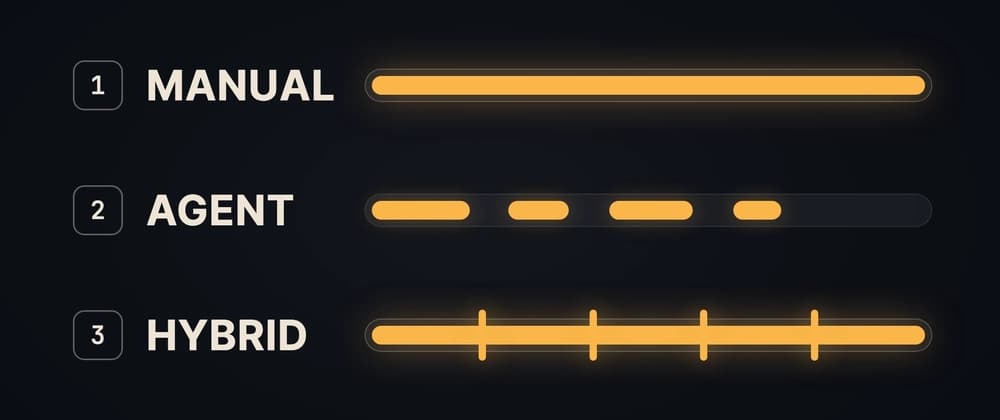
When you write code manually, you move through a fairly tight loop: think, write, run, observe, adjust.
You start with a feature and work through the details. Which files need to change? How does the data move through the application? What should happen when someone submits the form?
Then you write enough code to try it. Maybe it works. Maybe it throws an error. Maybe it technically works but doesn't behave the way you imagined. Whatever happens, you have something to respond to.
Each result gives you something to respond to, keeping the next decision close to the last one.
That loop can repeat dozens of times while you build a feature. As you get into it, you stop consciously moving between planning, coding, and testing. You're just solving the problem in front of you.
Manual coding has plenty of interruptions too. Builds take time, documentation sends you down rabbit holes, and sometimes you're simply stuck. But the work itself keeps asking you to make the next decision.
For me, that involvement has always been part of the reward. Getting a difficult feature working feels good because I experienced the little decisions and breakthroughs that got it there.
With an agent, the planning may look similar. You have an idea, a project plan, and a feature to build. Then you describe the feature and hand it off.
You're probably not going to sit there watching the agent work. You check your email, open another tab, or move to another project. Desktop tools make that especially easy. Project A is running, so you prompt project B. While that's running, you start something in project C.
Eventually, project A finishes. Now you have to remember what you asked for, what you expected, and which parts of the application might be affected. You review the changes, test the result, and find something that needs adjusting.
In the beginning, this can feel like having superpowers. You have several agents working at once, and things that once took days appear in minutes. The amount of output is exciting.
But I've found that it can also leave me scattered. Instead of spending two hours working through one difficult problem, I spend those hours repeatedly remembering where I left off in several different problems.
An illustration of fragmented attention, not measured productivity data. The colored rows represent different projects.
Each project has details you need to keep in your head: the current feature, the relevant files, the unresolved questions, and the decisions that brought you here. Returning to a project means rebuilding enough of that understanding to judge what the agent did.